
Economy
Government to blame for higher prices
Jonathan Small | October 26, 2026
Voter concerns about affordability have been a major theme in political races, and understandably so.
However, what is often unsaid is that many government policies are to blame for continued high prices. A panel of experts recently made that painfully clear to Oklahoma state lawmakers.
Since 2020, home prices nationwide have increased by 60 percent. Charles Gardner, senior research fellow at the Mercatus Center at George Mason University, noted that in Oklahoma, home prices increased 55 percent.
He told lawmakers they can stem the tide of rising housing costs with deregulatory action, including streamlining the permitting process, allowing more residential uses in commercial zones, and allowing smaller lot sizes, among other things. A Texas law allowing smaller lots has already resulted in more than 3,500 new housing units through June 2026, he noted.
Andrew Gillen, a research fellow at the Cato Institute, noted the cost of a public two-year college is $21,320 per year after accounting for tuition and fees, housing and food, books and supplies, transportation, and other related expenses. The cost of attending a public four-year college is $30,990 a year.
Trying to make college more affordable, lawmakers often increase state appropriations to colleges. But colleges take the increased funding and then still raise tuition rates. Research shows state college funding in nearly all states, including Oklahoma, is either higher today or equal to the inflation-adjusted amount provided in 1980, meaning there has been no meaningful “disinvestment” that forced offsetting tuition increases.
Gillen suggested policymakers should switch from appropriations-based funding for colleges to financial-aid-based funding for students. He said only 10 percent to 20 percent of state-appropriation funding benefits students in the form of greater college affordability, but 20 percent to 40 percent of student aid results in improved affordability. That’s not great, but it would be an improvement.
Since 2000, Oklahoma has more than doubled the share of its population covered by the Medicaid welfare program. Has that made health care cheaper? Not at all.
Robert Aery, executive director of the Hern Policy Institute, said the cost of health care in Oklahoma increased from $2,848 per capita to $9,102 per capita from 2000 to 2024. That far outpaced income growth. Since 2000, personal income per capita has increased 162 percent while health care per capita expenditures increased by 220 percent.
Nationwide, officials have found billions of dollars in improper Medicaid payments. Aery noted each improper Medicaid payment represents the displacement of a legitimate patient and urged lawmakers to strengthen Oklahoma’s anti-fraud efforts.
Voters’ concerns about affordability are justified. But the solution is not to grow the government even more. Instead, the answer is to slash the government’s role in the private sector and allow market forces to drive down prices.
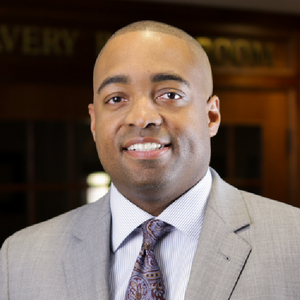
Jonathan Small
President
Jonathan Small, C.P.A., serves as President and joined the staff in December of 2010. Previously, Jonathan served as a budget analyst for the Oklahoma Office of State Finance, as a fiscal policy analyst and research analyst for the Oklahoma House of Representatives, and as director of government affairs for the Oklahoma Insurance Department. Small’s work includes co-authoring “Economics 101” with Dr. Arthur Laffer and Dr. Wayne Winegarden, and his policy expertise has been referenced by The Oklahoman, the Tulsa World, National Review, the L.A. Times, The Hill, the Wall Street Journal and the Huffington Post. His weekly column “Free Market Friday” is published by the Journal Record and syndicated in 27 markets. A recipient of the American Legislative Exchange Council’s prestigious Private Sector Member of the Year award, Small is nationally recognized for his work to promote free markets, limited government and innovative public policy reforms. Jonathan holds a B.A. in Accounting from the University of Central Oklahoma and is a Certified Public Accountant.