
Education
Oklahoma can’t expect better results when students spend less time in class
Jonathan Small | November 16, 2026
Oklahoma public schools’ poor standing in national rankings, typically in the bottom five states, has generated concern for decades now.
While several factors are at play, one of the most obvious is this: Kids in Oklahoma spend far less time in an actual classroom than their counterparts in many other states.
That was reinforced when the State Board of Education recently downgraded the accreditation of 59 school districts because a majority of students in those district schools tested far below grade-level expectations in math or reading for two years in a row.
Fifty-three of those districts are operating on a shortened-year school calendar of as few as 166 days.
In many states, the school year runs 180 days.
Is it really shocking that Oklahoma students don’t do as well as students in other states when many Oklahoma students may be in class nearly three weeks less per year than students elsewhere?
Fifty-three of the 59 school districts recently downgraded by the State Board of Education operate on shortened school calendars.
Under the shorter school-year calendar in Oklahoma, kids are in class fewer days but have longer days of school. That model has not been associated with the same learning gains that occur when children are physically in class for several additional weeks.
Until recently, the situation was even worse because many schools routinely included “distance learning” or “virtual learning” days in their already-shortened calendar. In practice, those “virtual” days often involved little or no direct teacher-student interaction and instead consisted of worksheet assignments that could be completed within an hour.
In the 2022-2023 school year, roughly one in five Oklahoma school districts shifted students to “virtual learning” for at least three work weeks, according to public records. That meant students could attend districts where the school year was already around 165 days instead of 180, with 15 of those 165 days done at home. If Oklahoma students are in front of a teacher for only 150 days while students in other states are in class up to 180 days, it’s no surprise that Oklahoma students fall behind.
Defenders of the status quo typically claim that “underfunding” is the cause of the shortened school year and extensive use of virtual days.
But NEA Research, hardly a right-wing entity, found that revenue receipts per Oklahoma student, based on average daily attendance, increased 55 percent from $9,724 in the 2017-2018 school year to $15,111 in the 2024-2025 school year. That $15,111 exceeds tuition rates at 80 percent or more of Oklahoma’s private schools. Money is not the culprit here.
Fortunately, lawmakers are addressing these problems. They have severely restricted “virtual days” and mandated a 173-day minimum school year starting in the 2027-2028 school year.
If Oklahomans want our public-school academic outcomes to improve, we need our kids in front of teachers.
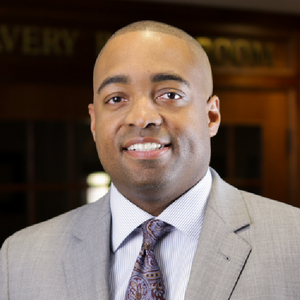
Jonathan Small
President
Jonathan Small, C.P.A., serves as President and joined the staff in December of 2010. Previously, Jonathan served as a budget analyst for the Oklahoma Office of State Finance, as a fiscal policy analyst and research analyst for the Oklahoma House of Representatives, and as director of government affairs for the Oklahoma Insurance Department. Small’s work includes co-authoring “Economics 101” with Dr. Arthur Laffer and Dr. Wayne Winegarden, and his policy expertise has been referenced by The Oklahoman, the Tulsa World, National Review, the L.A. Times, The Hill, the Wall Street Journal and the Huffington Post. His weekly column “Free Market Friday” is published by the Journal Record and syndicated in 27 markets. A recipient of the American Legislative Exchange Council’s prestigious Private Sector Member of the Year award, Small is nationally recognized for his work to promote free markets, limited government and innovative public policy reforms. Jonathan holds a B.A. in Accounting from the University of Central Oklahoma and is a Certified Public Accountant.