
Higher Education
OU debacle highlights dysfunction in higher ed
Jonathan Small | January 19, 2026
University of Oklahoma officials recently announced a graduate assistant was “arbitrary” in flunking a student for stating there are only two sexes.
Still, the incident highlights the degree to which a college education is becoming a joke.
OU students were asked to read an article about gender-nonconforming children and write a short essay in response.
Samantha Fulnecky wrote that she “strongly” disagreed with the idea that “encouraging acceptance of diverse gender expressions could improve students’ confidence,” calling it a “lie that there are multiple genders.”
Course instructor Mel Curth gave Fulnecky a zero, declaring it a “fact” that “every” major medical association “acknowledges that, biologically and psychologically, sex and gender is neither binary nor fixed.” In short, Fulnecky was expected to deny reality to get an A.
Because the assignment did not require research or citation of outside sources, many felt it was beneath the expectations of a credible college course. That’s true, yet it appears such “easy A” assignments were the norm for this online class.
Further, the instructor’s arbitrary decision to flunk Fulnecky makes one wonder how many students self-censor to avoid similar discrimination.
A recent incident at OU highlights the degree to which a college education is becoming a joke.
That the instructor was not a real professor, but a graduate assistant, is also alarming. Given what students pay to attend OU, they deserve better. More than a decade ago, a study commissioned by the Oklahoma Council of Public Affairs estimated that 20 percent of OU professors taught 60 percent of classes. Other professors contributed little but still drew large salaries. If most faculty were as productive as the top 20 percent, it would have saved nearly $100 million annually at OU, about $3,000 per student, and $82 million at OSU, again about $3,000 per student. One suspects those figures are much larger today.
While some professors are wildly overpaid, others are underpaid—such as in nursing schools, making it difficult to hire staff and train nurses despite strong market demand for those workers.
Unfortunately, federal student-loan programs fuel this madness by providing significant college revenue regardless of quality.
While OU regents recently eliminated low-enrollment programs, they need to do much more.
Sadly, many faculty believe colleges exist to serve the faculty, rather than staff being employed to serve students.
The American Association of University Professors launched a petition objecting to OU suspending Curth, declaring, “Principles of academic freedom entail the ‘right of faculty members to select the materials, determine the approach to the subject, make the assignments, and assess student academic performance in teaching activities.’”
Put simply, petition signers believe that instructors have the right to arbitrarily discriminate against students or that “academic freedom” is lost. I suspect most Oklahoma taxpayers are willing to make that trade to ensure their children get a college education worth the price of admission.
[For more articles about higher education in Oklahoma, visit AimHigherOK.com.]
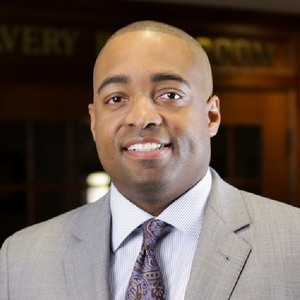
Jonathan Small
President
Jonathan Small, C.P.A., serves as President and joined the staff in December of 2010. Previously, Jonathan served as a budget analyst for the Oklahoma Office of State Finance, as a fiscal policy analyst and research analyst for the Oklahoma House of Representatives, and as director of government affairs for the Oklahoma Insurance Department. Small’s work includes co-authoring “Economics 101” with Dr. Arthur Laffer and Dr. Wayne Winegarden, and his policy expertise has been referenced by The Oklahoman, the Tulsa World, National Review, the L.A. Times, The Hill, the Wall Street Journal and the Huffington Post. His weekly column “Free Market Friday” is published by the Journal Record and syndicated in 27 markets. A recipient of the American Legislative Exchange Council’s prestigious Private Sector Member of the Year award, Small is nationally recognized for his work to promote free markets, limited government and innovative public policy reforms. Jonathan holds a B.A. in Accounting from the University of Central Oklahoma and is a Certified Public Accountant.