
Economy
SQ 832 copies policies that raised prices elsewhere
Curtis Shelton | February 26, 2026
On June 16, 2026, Oklahomans will vote on SQ 832. Visit www.sq832killsjobs.com to learn more.
Minimum-wage hikes often harm the very people they are intended to help. Losses of hours, benefits, and jobs frequently follow wage increases for minimum-wage workers, many of whom are entering the workforce for the first time.
While those may be the most severe consequences, they are not the only ones. Prices can also rise for everyone.
Oklahoma’s average hourly wage grew faster than in any of the states that adopted a $15 minimum wage.
Data tracking price changes from 2008 to 2024 show that states raising their minimum wages to $15 per hour have, on average, become more expensive at a faster rate than Oklahoma. On average, these $15-per-hour states experienced price increases of 38 percent. Five of the eight states with a $15 minimum wage saw prices rise faster than in Oklahoma. Oklahoma’s prices rose by 36 percent.
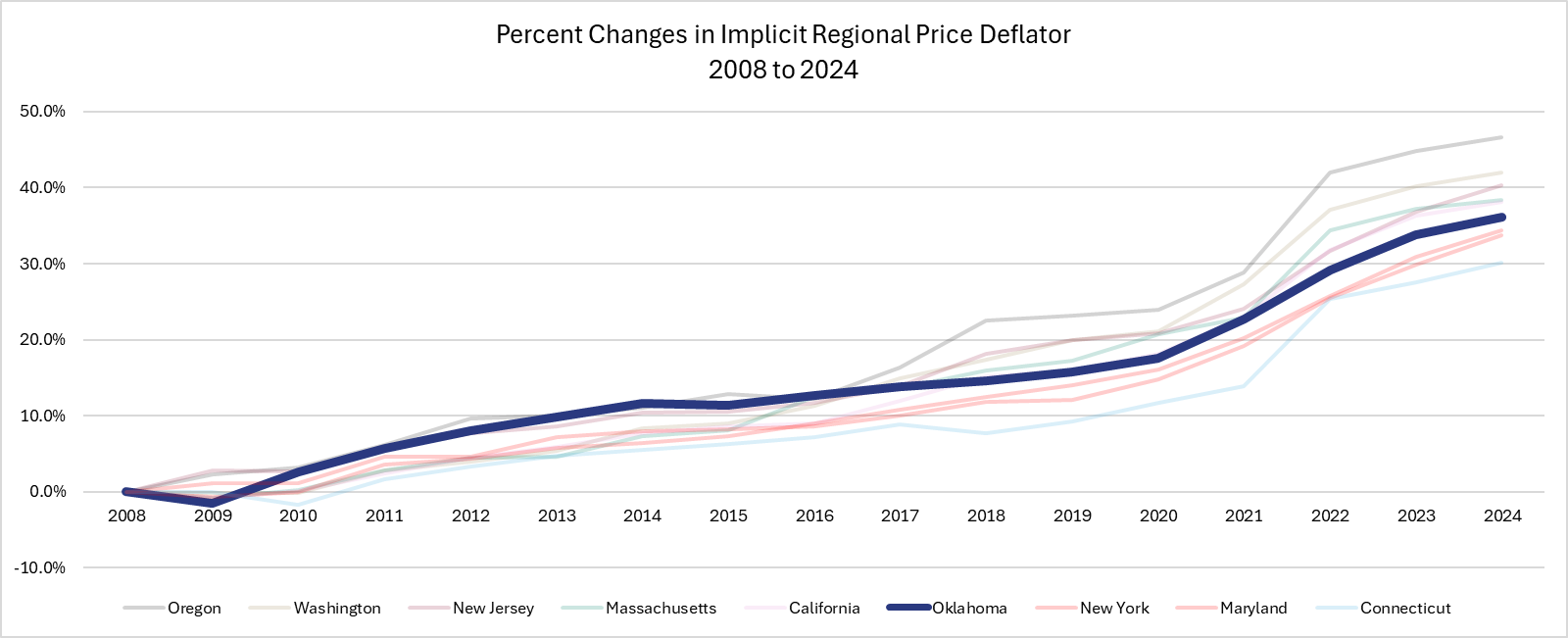
Source: Bureau of Economic Analysis
The other three states were New York, Maryland, and Connecticut, which were three of the five most expensive states in the country in 2008; Oklahoma was 42nd. By 2024, seven of the eight states with a $15-an-hour minimum wage were in the top 10 most expensive states. Oregon sits at 11th but had the greatest increase in prices of any state in the country since 2008.
What may surprise many is that, despite not raising its minimum wage, Oklahoma’s average hourly wage grew faster than in any of the states that adopted a $15 minimum wage. Oklahoma’s average hourly wage increased by 73 percent, rising from $17.44 to $30.16.
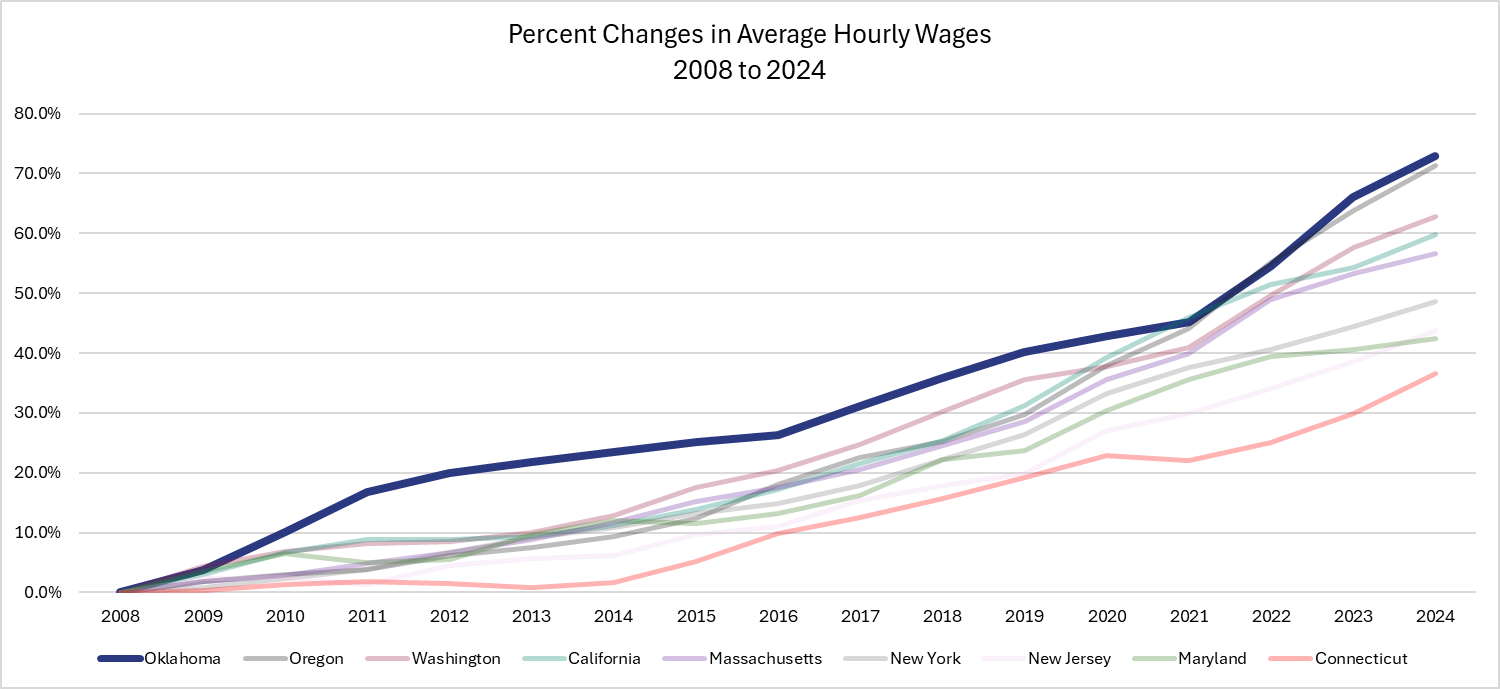
Source: Federal Reserve Bank of St. Louis
The next closest state was Oregon, where average wages grew by 71 percent. However, while Oregon moved from the 26th to the 11th most expensive state, Oklahoma became more affordable, shifting from 42nd to 47th—making it the fourth-cheapest state in which to live.
Oklahoma had the largest gap by far between its wage gains and price increases.
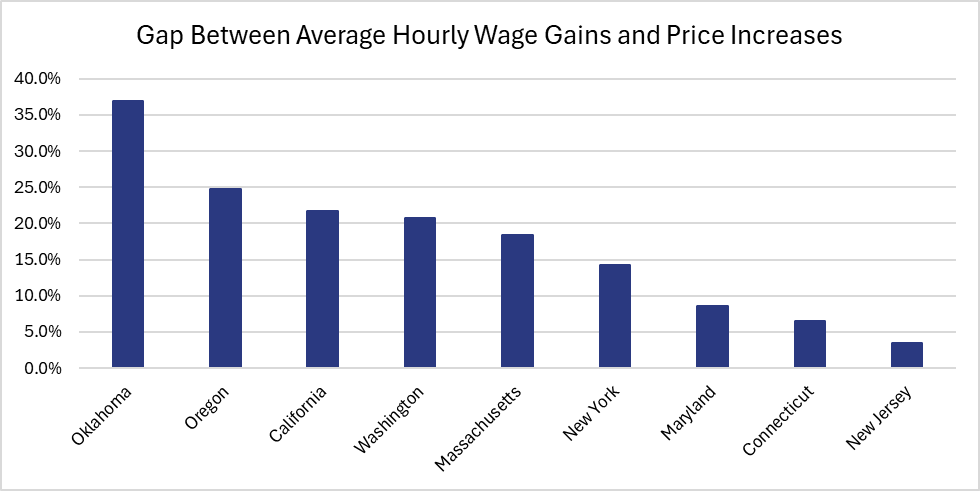
Sources: Federal Reserve Bank of St. Louis; Bureau of Economic Analysis; author’s calculations
SQ 832 mirrors policies implemented in other states that have resulted in reduced opportunities for young people and higher prices for everyone. Oklahoma should reject this approach and continue its pro-growth policies, which have expanded opportunity for all.

Curtis Shelton
Policy Director
Curtis Shelton currently serves as the policy director for OCPA with a focus on fiscal policy. Curtis graduated Oklahoma State University in 2016 with a Bachelors of Arts in Finance. Previously, he served as a summer intern at OCPA and spent time as a staff accountant for Sutherland Global Services.