
Economy
SQ 832 means higher prices
Jonathan Small | May 26, 2026
On June 16, 2026, Oklahomans will vote on SQ 832. Visit www.sq832killsjobs.com to learn more.
Supporters of State Question 832, which would impose a California-style wage law in Oklahoma that continually increases the state minimum wage based on the cost of living in places like New York City, portray it as a magic elixir that will boost economic growth and wages for all.
In reality, SQ 832 will boost prices for all while reducing job opportunities for many.
State Question 832 would impose a $15-an-hour minimum wage and require rapid escalation every year thereafter, putting the wage mandate on a fast track to $35 and higher in future years.
Having to pay 13 percent more for the same groceries is not going to help low-income families in Oklahoma.
Obviously, as wages rise, some businesses will reduce job creation, cut worker hours, or resort to automation.
But the ripple effects of SQ 832 mean those entry-level workers, and all Oklahomans, will also pay higher prices.
When the Employment Policies Institute recently commissioned a survey of 166 American economists, they found 59 percent believe a $15 an hour minimum wage will increase consumers’ cost of living. If the minimum wage is boosted above $20 an hour, as SQ 832 would soon require, 84 percent of economists believe surging costs are likely—with 42 percent predicting an above-$20 wage mandate will increase consumer costs “significantly.”
Just look at California, which already has SQ 832-style laws in place, to see this reality. The cost of living in Oklahoma is among the lowest among the 50 states. The annual cost of groceries here is an estimated $5,793 per year. But in California, those same groceries cost $6,586 annually.
If Oklahoma adopts California’s crazy wage policies, we’re going to get California’s crazy prices.
California’s SQ 832-style policies are a major reason for the price difference. Having to pay 13 percent more for the same groceries is not going to help low-income families in Oklahoma.
Notably, even a study put out by SQ 832 supporters indicates that poverty will be worse with the higher wage than it was recently. A Scioto Analysis report predicts Oklahoma’s poverty rate will be 14.3 percent if SQ 832 becomes law. That’s far higher than the poverty rate in Oklahoma when the minimum wage was left unchanged for a decade.
The Scioto Analysis report admits that Oklahoma’s poverty rate fell from about 16 percent in 2010 to roughly 11 percent by 2019. The minimum wage was $7.25 an hour the entire time. That runs contrary to the arguments made by SQ 832 supporters, who claim poverty gets worse when the minimum wage is not increased. Instead, the longer the minimum wage stayed the same, the more poverty fell.
Since 2019, COVID and Biden administration policies have fueled massive inflation that outpaced workers’ income growth and increased poverty. But the solution is not to embrace more heavy-handed policies like those that created inflation.
Put simply, if Oklahoma adopts California’s crazy wage policies, we’re going to get California’s crazy prices.
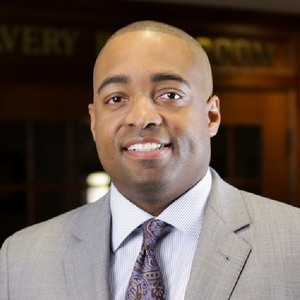
Jonathan Small
President
Jonathan Small, C.P.A., serves as President and joined the staff in December of 2010. Previously, Jonathan served as a budget analyst for the Oklahoma Office of State Finance, as a fiscal policy analyst and research analyst for the Oklahoma House of Representatives, and as director of government affairs for the Oklahoma Insurance Department. Small’s work includes co-authoring “Economics 101” with Dr. Arthur Laffer and Dr. Wayne Winegarden, and his policy expertise has been referenced by The Oklahoman, the Tulsa World, National Review, the L.A. Times, The Hill, the Wall Street Journal and the Huffington Post. His weekly column “Free Market Friday” is published by the Journal Record and syndicated in 27 markets. A recipient of the American Legislative Exchange Council’s prestigious Private Sector Member of the Year award, Small is nationally recognized for his work to promote free markets, limited government and innovative public policy reforms. Jonathan holds a B.A. in Accounting from the University of Central Oklahoma and is a Certified Public Accountant.