
Economy
Tax cuts and fiscal restraint have paid off for Oklahoma
Jonathan Small | April 13, 2026
The test of policy is not simply what people predict prior to its enactment, but what happens once a policy is in place. In Oklahoma, conservative fiscal policy has produced what advocates predicted: a growing economy that attracts new workers and investment.
When Gov. Kevin Stitt was elected to office in 2018, Oklahoma’s financial situation was in shambles. Massive tax increases had been enacted during an oil bust that did massive damage to our state economy. And some officials wanted to continue the tax-hiking trend, despite a recovery in the oil markets.
In 2019, Kent Olson, professor of economics emeritus at Oklahoma State University, predicted that Oklahoma state tax collections available for legislative appropriation would increase from $7.6 billion in 2019 to $11.2 billion by 2030. But Olson argued that spending should increase even faster, surging to $12.3 billion by 2030. As a result, he predicted an ever-growing “deficit” each year from 2020 to 2030, with the 2030 deficit hitting $1.1 billion.
An OSU professor urged lawmakers to raise taxes. Fortunately, they ignored him.
Olson urged lawmakers to increase the personal income tax rate from 5 percent to 6 percent, expand the sales tax to include services, and nearly double the state’s gross production tax. Those taxes would have hammered Oklahomans at nearly all income levels.
Fortunately, the governor and state lawmakers not only ignored Olson’s recommendations but also did the opposite. Policymakers have cut the personal income tax to 4.5 percent, lifted the sales tax off groceries, and left the gross production tax unchanged.
They’ve also restrained spending, typically appropriating less than what is authorized, building up state reserves. Today, Oklahoma has billions of dollars in savings, something unthinkable before 2019.
What have those pro-growth policies wrought? Oklahoma has been a top 10 state for domestic migration, meaning far more people are moving to Oklahoma from other states than leaving. Hire a Helper, a moving company, found that Oklahoma ranked ninth nationally for domestic migration in 2025. Internal Revenue Service data show that domestic migration boosted Oklahoma’s net adjusted gross income by roughly $1.3 billion total from 2019 to 2023.
In the past two years, all three major credit rating agencies—Fitch, Moody’s, and S&P—have upgraded Oklahoma’s credit rating.
In contrast, what’s happened in big-spending, tax-hiking states? Well, California and New York are hemorrhaging population and income today. Big, expensive government has been a net negative.
Put simply, the outlook in Oklahoma is far, far better today than in 2018—and that status is thanks to our leaders rejecting “expert” opinion that claimed the only path to success required continually raising taxes and boosting government spending at an exponential rate. Instead, the opposite has proven true.
The numbers don’t lie. Conservative policy works.
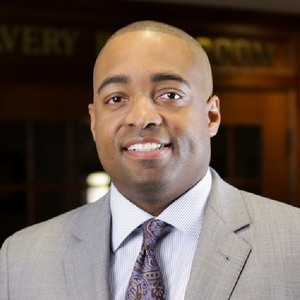
Jonathan Small
President
Jonathan Small, C.P.A., serves as President and joined the staff in December of 2010. Previously, Jonathan served as a budget analyst for the Oklahoma Office of State Finance, as a fiscal policy analyst and research analyst for the Oklahoma House of Representatives, and as director of government affairs for the Oklahoma Insurance Department. Small’s work includes co-authoring “Economics 101” with Dr. Arthur Laffer and Dr. Wayne Winegarden, and his policy expertise has been referenced by The Oklahoman, the Tulsa World, National Review, the L.A. Times, The Hill, the Wall Street Journal and the Huffington Post. His weekly column “Free Market Friday” is published by the Journal Record and syndicated in 27 markets. A recipient of the American Legislative Exchange Council’s prestigious Private Sector Member of the Year award, Small is nationally recognized for his work to promote free markets, limited government and innovative public policy reforms. Jonathan holds a B.A. in Accounting from the University of Central Oklahoma and is a Certified Public Accountant.