
Education
Win-win: School choice is sending students to private schools—and freeing up dollars for public schools
Jonathan Small | September 21, 2026
A new report from the Oklahoma Tax Commission shows that 42,012 students are using the Oklahoma Parental Choice Tax Credit (PCTC) program in the ongoing 2026-2027 school year, with a majority coming from low- or middle-income families across the state.
But the program’s benefits aren't limited to the children it directly serves.
Indirectly, the program has effectively freed up millions of dollars in funding in the public-school system, granting public schools greater financial flexibility.
Here’s how it works.
The PCTC program provides refundable tax credits of $5,000 to $7,500 per child to cover private school tuition. The largest tax credits go to those with the lowest incomes.
At the same time, the National Education Association reports that Oklahoma public schools had $15,111 in revenue receipts per student, based on average daily attendance, during the 2024-2025 school year, the most recent available.
As a result, every time a student uses the PCTC program to leave public school and enroll in a private school, it effectively frees up $15,111 in the public school. The offsetting cost of the tax credit, which is not deducted from public schools’ funding, is no more than $7,500.
In the 2025-2026 and 2026-2027 school years combined, more than 7,300 students have used the PCTC program to switch from public schools to private schools. Based on those students’ family incomes and the average tax-credit award in their bracket, data indicate that those students received $48.9 million in credits this year but freed up more than $110.4 million in public schools.
Some will object that a portion of that $110 million is tied up in buildings, and those costs don’t change when students leave. But even if we assume 30 percent of per-student revenue is tied up in those types of expenses, that still leaves more than $77 million for potential reallocation.
That’s real money.
At the same time, public-school choice is also thriving. In the 2025-2026 school year, there were 20,585 students who used the open-transfer process to shift from their home district to another public school.
This environment allows parents to find the best education for their child, regardless of where they live or how much they make. Oklahoma will be better off as a result.
Many school officials who opposed these school-choice programs also opposed this year’s bipartisan effort to strengthen the state reading law and boost literacy outcomes. They argued recess should count as instructional time. They objected to focusing on academic outcomes. Many did not address cell phones in the classroom until state lawmakers mandated it.
Given that track record, it’s not surprising that so many families are looking for alternatives. It’s a great irony that opponents’ failure to derail school choice is now, at least indirectly, shoring up public-school finances.
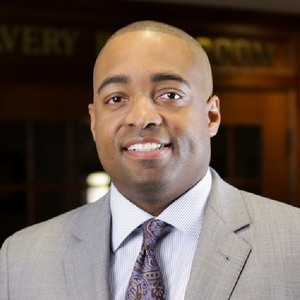
Jonathan Small
President
Jonathan Small, C.P.A., serves as President and joined the staff in December of 2010. Previously, Jonathan served as a budget analyst for the Oklahoma Office of State Finance, as a fiscal policy analyst and research analyst for the Oklahoma House of Representatives, and as director of government affairs for the Oklahoma Insurance Department. Small’s work includes co-authoring “Economics 101” with Dr. Arthur Laffer and Dr. Wayne Winegarden, and his policy expertise has been referenced by The Oklahoman, the Tulsa World, National Review, the L.A. Times, The Hill, the Wall Street Journal and the Huffington Post. His weekly column “Free Market Friday” is published by the Journal Record and syndicated in 27 markets. A recipient of the American Legislative Exchange Council’s prestigious Private Sector Member of the Year award, Small is nationally recognized for his work to promote free markets, limited government and innovative public policy reforms. Jonathan holds a B.A. in Accounting from the University of Central Oklahoma and is a Certified Public Accountant.