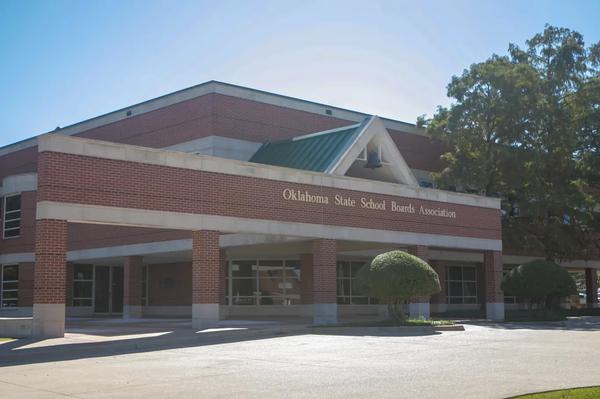
Education
OSSBA seeks another billion for schools … for administrators
Ray Carter | July 30, 2025
Since 2018, Oklahoma public school funding has increased by $3.3 billion, with per-pupil revenue surging 51 percent during that time.
But the Oklahoma State School Boards Association (OSSBA), a lobbyist organization hired by school districts, says Oklahoma schools need $1 billion to $2 billion more. And the head of OSSBA says Oklahomans should not necessarily expect that extra money to go to the classroom.
In a May interview with the Tulsa World, OSSBA Executive Director Shawn Hime said, “What we are hearing from teachers is they want to see investments in student support services—more counselors, assistant principals, etc.—the people who do the support work so teachers can focus on teaching.”
Hime’s statement comes as news to many educators and former educators, who are surprised to learn that they believe the problem with Oklahoma schools is an insufficient number of administrators.
“OSSBA is a paid lobbying organization that does nothing to help improve education in Oklahoma. One thing most teachers agree on is that we do not need more money going to bloat in the district office or adding more counselors,” said Julie Collier, an Oklahoma teacher. “This idea is offensive to teachers in Oklahoma who are severely underpaid.”
State Rep. Gabe Woolley, a Broken Arrow Republican who worked as a teacher prior to his 2024 election to the Oklahoma House of Representatives, was similarly baffled by Hime’s claim.
“The funding in education is top-heavy,” Woolley said. “Rather than going directly to the students and teachers, it often seems to go to more administration. If those administrators are not in the classroom helping to lower the student-to-teacher (adult) ratio for more individualized instruction, then what’s the point?”
Notably, Oklahoma already ranks among the states providing the smallest share of funding to classroom instruction, a trend that would be supercharged if another $1 billion in new spending were devoted primarily to non-teaching positions in schools.
And the figures cited by OSSBA to argue for another billion in funding do not reflect the current reality in Oklahoma. In fact, OSSBA significantly understates existing public-school revenue.
OSSBA figures don’t match what Oklahoma schools publicly report
On the organization’s website, OSSBA officials argue the state of Oklahoma needs to spend an additional $1.2 billion to $2 billion per year based on an alleged “education investment gap” with surrounding states.
Notably, the OSSBA claims Oklahoma’s per-pupil spending was $11,051 per student in the 2022-2023 school year and $12,139 in 2023-2024. But both those figures are far lower than the per-pupil revenue reported by public schools in Oklahoma, and far lower than what even liberal groups, such as a national teachers’ union, report for Oklahoma.
According to financial data reported by schools to the state’s Oklahoma Cost Accounting System (OCAS), new revenue in Oklahoma public schools reached $9,600,703,488 in the 2023-2024 school year. Since student enrollment was 698,923 that year, that comes out to an average of $13,736 per pupil, far higher than the top figure cited by OSSBA.
“One thing most teachers agree on is that we do not need more money going to bloat in the district office or adding more counselors.” —Oklahoma teacher Julie Collier
In a report released in April, the National Education Association (NEA) similarly found that Oklahoma had $13,028 in revenue receipts per student, based on fall enrollment from the 2023-2024 school year, and $14,066 in revenue receipts per student when calculated based on average daily attendance.
That suggests that actual per-pupil revenue in Oklahoma public schools is up to 27 percent greater than the level cited by OSSBA.
Furthermore, the average per-pupil revenue in Oklahoma is greater than the average private-school tuition in Oklahoma, according to figures compiled by Private School Review.
In addition, OSSBA claims Oklahoma had $7.75 billion for public schools in the 2022-2023 school year.
But in the 2022-2023 school year, Oklahoma public schools reported having $8.8 billion in new revenue, or one billion more than the OSSBA claims. And that figure doesn’t include savings held in reserve. If that money is included, schools reported having $12.3 billion that year.
Spending increases have not boosted academic performance; bureaucratic bloat may be a reason why
The figures reported by Oklahoma schools to the Oklahoma Cost Accounting System indicate that per-pupil revenue has increased by 51 percent since the 2017-2018 school year, when Oklahoma public schools reported having $6,300,400,107 in new revenue and statewide enrollment of 694,816 for an average of $9,067 per student.
Despite the dramatic increase in funding for Oklahoma schools since 2018, academic results have not improved. In fact, they have gotten worse.
The average ACT composite score in Oklahoma schools was significantly lower in 2024 than in 2018. An identical share of students took the test both years.
According to National Assessment of Educational Progress (NAEP) tests administered in Oklahoma and nationwide in 2024, Oklahoma fourth- and eighth-grade students’ achievement in reading and math are now ranked among the nation’s worst.
Researchers say 10 points on a state’s NAEP scale score roughly equates to a year of learning. Oklahoma’s fourth-grade reading NAEP score has declined nine points since 2019.
Why have outcomes gotten worse as funding increased? One possible explanation: Oklahoma devotes far less money to instruction than nearly all other states—a trend that could become even worse if OSSBA is successful in increasing spending by another $1 billion without devoting resources to classroom instruction.
According to information compiled by the National Center for Education Statistics report for the 2022-2023 school year, only 53.3 percent of Oklahoma school funding went to instruction, on average. The national average is 58.8 percent.
Despite an increase in funding for Oklahoma schools since 2018, academic results have gotten worse.
Furthermore, many other states that are rural and share similar demographics to Oklahoma have nonetheless devoted a larger share of funds to instruction.
In Idaho, the average share of funds going to the classroom is 58.6 percent. In Kansas, the average is 58.2 percent. In Kentucky, the average is 58.3 percent. In Texas, the average is 57.3 percent. In Wyoming, 58.4 percent.
Other states have exceeded the national average, including several rural states.
The average in Florida is 59.9 percent. In Georgia, the average is 60.6 percent. In Nebraska, the average is 61.1 percent. In North Carolina, the average is 61.4 percent. In North Dakota, it is 59.4 percent. In Utah, it is 62.4 percent.
The situation in many Oklahoma schools is even worse than what the statewide average indicates.
Data recently released by state Rep. Chad Caldwell, R-Enid, shows that less than half of school funding goes to instruction in roughly 150 of Oklahoma’s more than 500 school districts.
The share of funds diverted from the classroom in Oklahoma translates into millions of dollars statewide that would go to instruction in other states.
Caldwell sought to address that problem during the 2025 legislative session, filing House Bill 1280, which would have required that at least 50 percent of a school district’s annual budget go to “instructional expenditures.”
The Oklahoma State School Boards Association opposed the bill, claiming HB 1280 “is an intrusion on local control and prevents school boards from allocating funds based on the needs of students.”
The legislation ultimately failed to pass the Oklahoma House of Representatives.
To increase school funding while diverting more money away from instruction only adds salt to the wound, Collier said.
“Districts in Oklahoma have a budgeting problem,” Collier said. “Therefore, budgeting to allow for teacher pay incentive programs would be helpful to retain and obtain quality teachers.”
In his time as a teacher, Woolley said he found the greatest improvements in outcomes came from “more direct and personalized instruction” between teachers and children, not from increased administrative spending or technology purchases.
“As an educator, I learned quickly that the more you tapped into the child’s natural design and purpose, the better they did,” Woolley said. “More hands-on learning, more parental involvement, and honestly less technology in many cases, always seemed to show more genuine and positive results. In fact, when we embraced this type of learning in my classroom, it utilized very little resources and funding.”
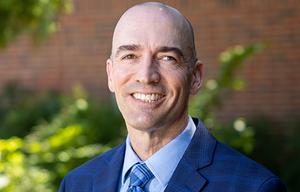
Ray Carter
Director, Center for Independent Journalism
Ray Carter is the director of OCPA’s Center for Independent Journalism. He has two decades of experience in journalism and communications. He previously served as senior Capitol reporter for The Journal Record, media director for the Oklahoma House of Representatives, and chief editorial writer at The Oklahoman. As a reporter for The Journal Record, Carter received 12 Carl Rogan Awards in four years—including awards for investigative reporting, general news reporting, feature writing, spot news reporting, business reporting, and sports reporting. While at The Oklahoman, he was the recipient of several awards, including first place in the editorial writing category of the Associated Press/Oklahoma News Executives Carl Rogan Memorial News Excellence Competition for an editorial on the history of racism in the Oklahoma legislature.