
Education
Poll: Oklahoma voters support school-choice tax credit by more than 2-to-1
Ray Carter | October 20, 2026
Oklahoma likely voters support the Oklahoma Parental Choice Tax Credit (PCTC) program by a margin of more than two to one, and they support raising the program cap to allow more families to participate by an equally lopsided margin, according to a new poll released by the “yes. every kid. foundation.”
The Oklahoma Parental Choice Tax Credit program provides refundable tax credits of $5,000 to $7,500 per child to cover the cost of private school tuition. The largest tax credits go to those with the lowest incomes, and families with income of less than $150,000 per year are prioritized.
According to the Oklahoma Tax Commission, 42,012 students are using PCTC for the 2026-2027 school year, an increase of 6 percent compared to the end of the 2025-2026 school year.
The majority of participating students come from lower-income families and middle-class families with incomes of $150,000 or less. Those students received 60.3 percent of all school-choice tax credits issued this year.
The poll asked survey respondents, “As you may know, Oklahoma has a refundable tax credit that lets Oklahoma families receive their tax dollars back to use for a child’s education. Families can spend the money on things like tuition, online education programs, tutoring, curriculum and textbooks, therapies, and other direct education needs of their children. Based on what you know, do you have a favorable or an unfavorable opinion of this refundable tax credit?”
The survey found that a majority of respondents favor keeping the program available to all K-12 families rather than restricting it to lower-income households.
The poll found that 59 percent of likely Oklahoma voters held a favorable view of the program, compared with 25 percent unfavorable.
Oklahomans participating in the survey were also asked, “Even with the recent expansion, this tax credit program is capped, which limits the total number of families who can use it to find a school and educational resources that best fit their children’s needs. Would you support or oppose increasing the cap so that more families and children across the state can participate?”
The poll found that 54 percent of likely Oklahoma voters support increasing the program cap, compared to 27 percent who oppose an increase.
In total, more than $268.8 million in parental choice tax credits have been issued for the 2026-2027 school year, with $264.7 million counting against the current cap of $275 million.
If program participation grows during the 2027-2028 school year at the same rate as this year, demand is likely to exceed the program’s current $275 million cap.
The survey also informed participants, “Oklahoma’s tax credit costs up to $7,500 per student, less than the roughly $13,000 Oklahoma spends per student in public school each year. The credit saves taxpayers money, gives K-12 families more flexibility to find the right education for their child, and reduces strain on the public school system.”
When asked if that information made them more or less supportive of the school-choice program, 50 percent of respondents said they became more supportive.
The actual gap between the per-pupil revenue in public schools and the maximum school-choice tax credit is even larger than the poll question reported, according to data from the National Education Association (NEA), a major teachers’ union.
The research arm of the NEA reports that Oklahoma’s public schools had $15,111 in revenue receipts per student, based on average daily attendance, during the 2024-2025 school year, the most recent for which full data is available.
As a result, every time a student uses the Oklahoma Parental Choice Tax Credit program to leave public school and enroll in a private school, it effectively frees up $15,111 in the public school. The offsetting cost of the tax credit, which is funded separately from public schools’ funding, is no more than $7,500.
In the 2025-2026 and 2026-2027 school years combined, more than 7,300 students have used the program to switch from public schools to private schools in Oklahoma.
Based on those students’ family incomes and the average tax-credit award in their brackets, Oklahoma Tax Commission data indicate that those students received around $48.9 million in credits this year while effectively freeing up as much as $110.4 million in public schools.
Funding for public schools has surged in recent years even as policymakers have enacted robust school-choice policies that allow families to access private schools.
The survey found that Oklahoma voters are more likely to support candidates who favor greater educational choice.
The $15,111 in revenue receipts per student provided to public schools during the 2024-25 school year represented a 55 percent increase from 2017-18, when a prior edition of the NEA report found per-student revenue receipts of $9,724 in Oklahoma public schools.
A majority of poll respondents said the Parental Choice Tax Credit should remain available to every K-12 family in Oklahoma; just a third believe it should be restricted to the lowest-income families.
The poll also showed that 56 percent of likely Oklahoma voters said they would be more likely to vote for a candidate who prioritizes giving K-12 families more choices and control, compared with just 18 percent who said they were less likely to support that candidate.
Similarly, by a more than two-to-one margin, Oklahoma voters said they were more likely to support a candidate who supports raising the cap on the Oklahoma Parental Choice Tax Credit program.
The Oklahoma statewide survey of 608 likely voters was conducted Sept. 16 to Sept. 18. The poll’s margin of error is +/- 4.0 percent.
Of the voters surveyed, 55 percent said they voted for Republican candidate Donald Trump for president in 2024 while 33 percent voted for Democratic candidate Kamala Harris. In the 2024 presidential race, 66 percent of Oklahoma voters cast their ballots for Trump while just under 32 percent supported Harris.
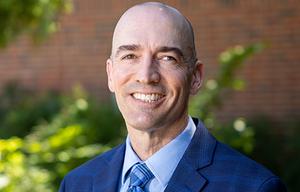
Ray Carter
Director, Center for Independent Journalism
Ray Carter is the director of OCPA’s Center for Independent Journalism. He has two decades of experience in journalism and communications. He previously served as senior Capitol reporter for The Journal Record, media director for the Oklahoma House of Representatives, and chief editorial writer at The Oklahoman. As a reporter for The Journal Record, Carter received 12 Carl Rogan Awards in four years—including awards for investigative reporting, general news reporting, feature writing, spot news reporting, business reporting, and sports reporting. While at The Oklahoman, he was the recipient of several awards, including first place in the editorial writing category of the Associated Press/Oklahoma News Executives Carl Rogan Memorial News Excellence Competition for an editorial on the history of racism in the Oklahoma legislature.