Education
‘Protect your power’: Leaked NEA playbook exposes union push to bypass payroll-deduction bans
Ray Carter | November 20, 2026
For years, Oklahoma school districts have used taxpayer-funded payroll systems and staff to collect and remit membership dues for teachers’ unions. School districts do not provide that service for numerous other groups that teachers join.
Union officials have fought against legislation that would end that special treatment, often suggesting it will create a hardship for teachers.
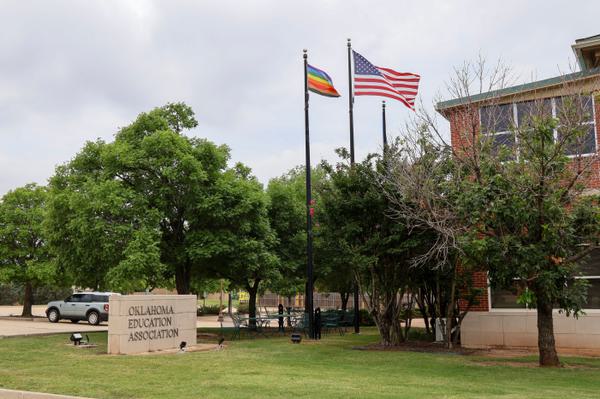
But a recent document from the National Education Association, the national parent of the Oklahoma Education Association, admitted the organization can handle that task without state involvement, stating the process will be “easy” and “quick.”
The documents indicated that the union’s main concern is that many teachers, given the chance to reconsider, may opt to no longer pay union dues once they are not automatically deducted from a paycheck by the school employer.
Several NEA documents were obtained by Defending Education, which released a report quoting from them and providing scanned copies of each document.
According to the NEA’s “AutoPay Playbook,” union officials describe switching members to independent electronic funds transfers as “easy,” “quick,” and “simple.”
“The goal for the NEA is to convert their members over to their ‘AutoPay’ program, which draws member dues via recurring electronic funds transfers (EFT),” the Defending Education report stated. “Because of state legislatures passing laws that prohibit public school districts from deducting dues from employees’ paychecks, the union aim is to secure direct, independent access to member funds, ensuring the NEA maintains its revenue and membership numbers.”
In a document titled “AutoPay Playbook,” NEA officials noted that some form of payroll-protection law, which bans schools from handling dues processing for unions, has been enacted in Florida, Kentucky, Tennessee, Arkansas, West Virginia, and Indiana.
A similar law was enacted in Oklahoma in 2015, but a subsequent Attorney General’s opinion (AG Opinion 2023-9) declared that the law’s prohibition applies strictly to organizations bargaining under federal law. Thus, Oklahoma public school districts remain legally authorized to process voluntary payroll deductions for teacher unions operating under state law.
The NEA urged other states’ affiliates to launch campaigns to convince union members to authorize automatic dues payment through the union’s “AutoPay” program rather than having the school employer handle that job, due to concern that more states may soon cease the practice of handling dues processing for the union.
The NEA document urged its state affiliates to act quickly “to protect your power.”
The document provided sample communication templates that can be sent to teachers to encourage them to switch to the union’s AutoPay program.
One sample passage stated, “Switching to AutoPay is easy, quick, and a one-time change.”
The NEA is urging its state affiliates to act quickly "to protect your power," highlighting the stakes as Oklahoma lawmakers revisit proposals to end public-school processing of union dues.
Another sample message declared, “It’s a simple switch that only takes a few minutes. The amount stays the same, and our dues will still be deducted on payday. Sign up once and you’re done.”
The NEA document conceded that union officials fear many teachers will not make the switch and instead will opt out of the union if school employers no longer deduct dues from their paychecks.
“Our research tells us the most challenging members to convert are those who struggle to see the value of the union,” the NEA document stated.
In its messaging advice to state affiliates working to shift teachers to the AutoPay system, the NEA specifically advised against using communications that indicate teachers have a choice.
“DON’T say ‘eDues,’ ‘direct pay,’ or ‘EFT,’ and do not say ‘recommit’ or ‘recommit your membership,’” the document stated.
It also advised, “DON’T say that AutoPay is a way to modernize or ‘update and upgrade’ paying our dues. Similarly, don’t remind members that many of us pay other bills automatically from our bank accounts.”
Should teachers not readily shift to AutoPay, the union advised more aggressive outreach, stating, “Home visits (knocking on doors) are a great way to target members who need to convert.”
After lawmakers in Idaho passed a law ending the practice of public-school employers handling dues deduction for the teachers’ union, the Idaho Education Association (IEA) announced it was cutting roughly 13 percent of its staff, eliminating four organizer positions, closing all five of its regional offices, and scaling back its annual Summer Institute.
On Oct. 1, Idaho Education News reported that IEA’s board of directors announced the cuts in an email to union members. The email stated that one factor in the decision was “the challenges created by recent legislative policies, including House Bill 516,” the Idaho law that ended state processing of union-dues payroll deductions.
On April 24, after the Idaho bill had been signed into law, but before it went into effect, the union urged its members to switch to IEA AutoPay.
In recent years, Oklahoma lawmakers have considered updating the 2015 law by enacting new statutory language explicitly covering collective bargaining under state law. So far, those efforts have not been successful.

Ray Carter
Director, Center for Independent Journalism
Ray Carter is the director of OCPA’s Center for Independent Journalism. He has two decades of experience in journalism and communications. He previously served as senior Capitol reporter for The Journal Record, media director for the Oklahoma House of Representatives, and chief editorial writer at The Oklahoman. As a reporter for The Journal Record, Carter received 12 Carl Rogan Awards in four years—including awards for investigative reporting, general news reporting, feature writing, spot news reporting, business reporting, and sports reporting. While at The Oklahoman, he was the recipient of several awards, including first place in the editorial writing category of the Associated Press/Oklahoma News Executives Carl Rogan Memorial News Excellence Competition for an editorial on the history of racism in the Oklahoma legislature.