
Law & Principles
With California election system, no Governors Bellmon, Bartlett, Keating, or Stitt
Ray Carter | December 10, 2025
Since Oklahoma became a state in 1907, five Republicans have been elected as governor.
But under the California-style “top two” election system proposed by State Question 836, four of those five candidates would not have been on the November general-election ballot the year they were first elected.
Instead, Oklahomans would have been consistently limited to a choice of only two Democratic gubernatorial candidates in November elections, records show.
And if roughly 5,400 votes had shifted in one primary, all five of Oklahoma’s Republican governors would have been kept off the general-election ballot under the California-style election system that activists now wish to impose on Oklahomans.
Some conservatives believe that is the goal of those promoting the California election system and SQ 836—to concoct a system where Democrats are more likely to prevail even when the broad electorate strongly prefers a Republican candidate.
“A core principle of Oklahoma’s election system is that each political party has the right to select its own nominee for the general election,” said Ronda Vuillemont-Smith, a former chair of the Tulsa County Republican Party who was a party to a lawsuit that unsuccessfully challenged SQ 836. “Each party’s members—Republicans, Democrats, and Libertarians—should have a direct voice in who represents them on the November ballot. SQ 836 weakens Republican voters and fractures the conservative voice.”
The top-two proposal would have rewritten Oklahoma history—without Republican governors.
Oklahoma’s current election system allows Republican voters to pick Republican nominees in party primaries, as Democratic voters do the same in their primaries. The two parties’ candidates then face off in the November general election along with any independent candidates who file.
That model has been used successfully not only in Oklahoma but across the country throughout most of the nation’s history.
But under the proposed State Question 836, all Oklahoma candidates—Democrats, Republicans, and independents—would be placed on a single ballot with all voters casting ballots. The two candidates receiving the most votes would then proceed to the November general election, even if they are both members of the same political party.
That would largely mirror California elections, where even statewide races have involved only two Democratic candidates.
An initiative-petition effort is underway to collect 172,993 valid signatures to place SQ 836 on the ballot in Oklahoma.
If Oklahoma had operated under the proposed California system in the past, it would have changed the outcomes of numerous races—overwhelmingly to the benefit of the Democratic Party.
No Republicans on the General-Election Ballot
Since 1970, there have been seven open-seat gubernatorial races in Oklahoma in which no incumbent was running.
Had the California election system been in place, Oklahoma voters would have likely been limited to a choice of two Democratic candidates in the November election in five of those races.
State election records also show a “top two” California system would have barred Republican gubernatorial candidates from Oklahoma’s general election ballot in nearly every election in which a Republican candidate was first elected under Oklahoma’s current election system.
In 1962, Henry Bellmon became the first Republican elected governor of Oklahoma, receiving 55 percent of the vote to 44 percent cast for Democratic candidate W. P. Bill Atkinson.
But under the California model, Bellmon would not have been on the general-election ballot that year.
In the 1962 primary, 14 candidates filed for governor—12 Democrats and two Republicans. While Bellmon easily prevailed in the Republican primary, the raw number of votes he received totaled 56,560. Six Democrats received more raw votes in their primary. Thus, under the California election system, Oklahoma voters would have been forced to choose between two Democrats during the November 1962 general election—Atkinson and Raymond Gary, a former governor seeking a non-consecutive second term.
In 1966, Dewey F. Bartlett became the state’s second Republican governor, receiving 55.6 percent of the vote to 43.7 percent for Preston J. Moore, the Democratic candidate.
But under SQ 836’s California-style election system, Bartlett would not have been an option in November.
In the primary election, Bartlett received 46,053 votes, advancing to the runoff election that he won, making him that year’s GOP nominee.
However, 16 candidates filed for governor in 1966—13 Democrats and three Republicans. Under the California election system, the top two finishers would have been Democrats Gary (who received 160,825 primary votes) and Moore (who received 104,081 primary votes), turning that year’s general election into another Democrat-only affair.
A similar scenario would have played out in 1986, when Bellmon successfully sought a second, non-consecutive term as governor. In the November 1986 election, Bellmon won with 47.4 percent of the vote to 44.5 percent cast for Democratic candidate David Walters, with the remaining vote split between two independent candidates.
But under SQ 836’s California-style election system, Bellmon would not have been an option for general-election voters.
That year, 11 candidates filed for governor—six Democrats and five Republicans. In the primary, Bellmon was chosen as the GOP nominee, receiving 111,665 votes. But Walters and fellow Democrat Mike Turpen received 238,165 and 207,357 votes, respectively, meaning those two Democrats would have been the “top two” vote recipients and that year’s general election would have been a Democrat-only affair under the California system.
In 1994, Frank Keating was elected Oklahoma’s third Republican governor, receiving 466,740 votes to 294,936 cast for Democratic candidate Jack Mildren and 233,336 votes cast for independent candidate Wes Watkins.
But under the California model, Keating would not have been an option for voters in November, who would have likely been forced to instead choose between two Democrats (or between a Democrat and the Democrat-turned-independent Watkins).
Critics of SQ 836 say the measure would fracture the conservative vote and sideline party members’ ability to choose their own nominees.
In that year’s gubernatorial primaries, there were nine candidates on the ballot—four Democrats and five Republicans. While Keating received 117,265 primary votes, Mildren received 214,765 and Democratic candidate Bernice Shedrick received 165,066 votes, meaning those two would have likely advanced to the November election under the California election system.
In 2018, Kevin Stitt became Oklahoma’s fifth Republican governor, receiving a little over 54 percent of the vote to the 42 percent received by Democratic nominee Drew Edmondson and 3.4 percent that went to Libertarian Chris Powell.
But under the California model, that year’s election would have been a Democrat-only affair.
In Oklahoma’s 2018 gubernatorial race, there were 10 candidates who filed to run as Republicans and two who filed to run as Democrats. In the June 2018 primary, 452,606 Oklahomans cast a vote for a Republican gubernatorial candidate compared to just 395,494 votes cast for a Democrat.
But under SQ 836’s California model, the November ballot that year would have pitted Edmondson against fellow Democrat Connie Johnson with no Republican option. Because the Republican vote was split 10 ways in the primary, no GOP candidate received more votes than the second-place finisher in the Democratic primary.
In that year’s primaries, Edmondson received 242,764 votes while Johnson received 152,730. The top finisher in the Republican primary, former Oklahoma City mayor Mick Cornett, received only 132,806 votes.
Cornett and Stitt advanced to a primary runoff, which Stitt won before proceeding to win the November general election.
Former Gov. Mary Fallin would have been the only Republican elected governor in Oklahoma history who would have also advanced to the general-election ballot the first time she sought the office under the California model.
But it would have been a close call.
In 2010, six candidates filed for governor—two Democrats and four Republicans. In that year’s primaries, Fallin received 136,477 votes while Democratic candidates Drew Edmondson and Jari Askins received 131,097 and 132,591, respectively.
Under the California election system, if more than 5,380 votes shifted from Fallin to one of her GOP opponents in the primary, it would have been the two Democratic candidates who advanced to the November election.
The California election system would have not only changed the outcomes of most Oklahoma gubernatorial elections won by a Republican but would have also similarly limited voter choices to candidates from just one party in other open-seat gubernatorial races, including in 1978 and 1990. And the 1974 gubernatorial election, in which scandal-plagued incumbent Gov. David Hall unsuccessfully sought re-election but was ousted in the Democratic Party primary, would have also been a Democrat-on-Democrat general election under the California model.
Aside from Fallin, Steve Largent is the only Republican gubernatorial candidate who would have advanced to a general-election ballot in an open-seat race under the California model. However, the California model would have kept Democrat Brad Henry, the Democratic Party’s only successful Oklahoma gubernatorial candidate in three decades, off the 2002 ballot.
The 2002 open-seat race would have instead offered voters a choice of Largent as the Republican nominee and Vince Orza as the Democrat. Under Oklahoma’s existing system, Henry won the Democratic nomination in a runoff against Orza, who was controversial among Democrats as a longtime Republican who switched parties. Henry unified Democratic voters and ultimately won an upset victory over Largent, thanks in part to a strong third-party bid that year by independent Gary Richardson.
Even so, election results indicate that SQ 836’s California-style election system would have served primarily to keep Republicans off the general-election ballot in open-seat gubernatorial races for most of the past half-century.
Vuillemont-Smith said SQ 836 would ultimately deprive voters of serious races involving candidates who have undergone credible vetting.
“Political parties exist for a reason: to organize ideas, unify voters, and select candidates who reflect their values,” Vuillemont-Smith said. “SQ 836 disrupts that process and weakens the ability of Oklahoma Republicans to shape their own ballot.”
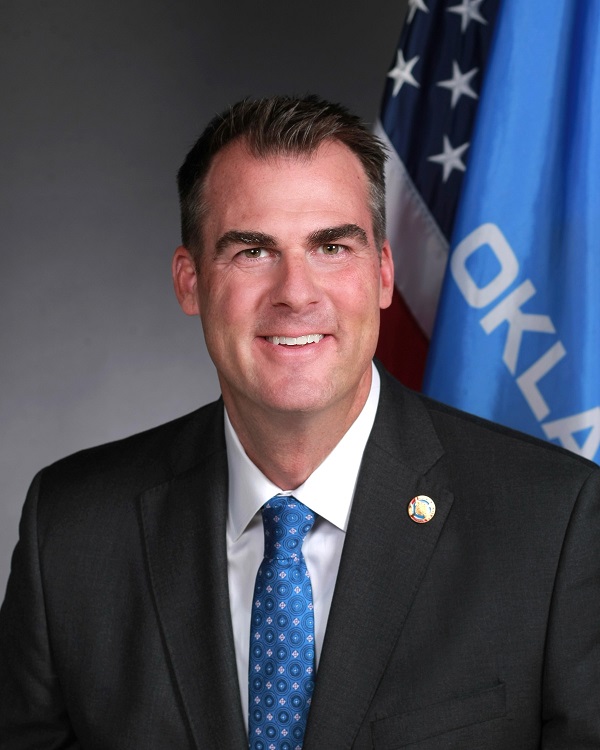
Photo credits: photo of Governor Bellmon; photo of Governor Bartlett; photo of Governor Keating; photo of Governor Stitt
Ray Carter
Director, Center for Independent Journalism
Ray Carter is the director of OCPA’s Center for Independent Journalism. He has two decades of experience in journalism and communications. He previously served as senior Capitol reporter for The Journal Record, media director for the Oklahoma House of Representatives, and chief editorial writer at The Oklahoman. As a reporter for The Journal Record, Carter received 12 Carl Rogan Awards in four years—including awards for investigative reporting, general news reporting, feature writing, spot news reporting, business reporting, and sports reporting. While at The Oklahoman, he was the recipient of several awards, including first place in the editorial writing category of the Associated Press/Oklahoma News Executives Carl Rogan Memorial News Excellence Competition for an editorial on the history of racism in the Oklahoma legislature.