
Education
School-choice backers cruise to victory in Oklahoma primaries
Ray Carter | June 18, 2026
Legislative incumbents and candidates who embraced school choice won races across Oklahoma when the final votes were tallied the night of the June 16 primary.
“Tonight’s results show that support for school choice is not only mainstream, but expected of serious political candidates in Oklahoma,” said Jennifer Carter, Oklahoma State Lead for the AFC Victory Fund. “There’s never been any conflict between fighting to improve public schools and also giving families as many choices as possible to ensure their children receive a quality education. Congratulations to the victorious candidates across Oklahoma who are making education in all forms a top priority.”
The Oklahoma Parental Choice Tax Credit program provides refundable tax credits of $5,000 to $7,500 per child to cover the cost of private school tuition. The largest tax credits go to those with the lowest incomes, and families with income of less than $150,000 per year are prioritized.
The program allowed roughly 40,000 students to access private schools in the 2025-2026 school year, with the majority coming from low-income or middle-class families. The program was capped at $250 million annually, but trends indicated demand would exceed that supply during the 2026-2027 school year.
As a result, lawmakers voted to increase the cap to $275 million. The legislation authorizing that change, House Bill 3705, passed with overwhelming support.
HB 3705 passed the Oklahoma House of Representatives on a 70-19 vote and cleared the Oklahoma Senate on a 39-9 vote. Nearly all House Republicans supported the bill, as did all but one Senate Republican.
Education-choice advocates say the results indicate support for school choice has become a mainstream expectation among Oklahoma voters, particularly within Republican primary electorates.
Many Republican lawmakers voting in favor of school choice either drew no primary opponents or easily won their party’s nomination during the June 17 primaries, aside from one Republican who was narrowly forced into a runoff. (That incumbent finished first in a three-candidate field, leading his nearest competitor by nearly 17 percentage points.)
“The people of Oklahoma sent a resounding message on Election Day that they support the conservative Republican work being done by the House of Representatives,” House Speaker Kyle Hilbert, R-Bristow, noted in a post-election press release. “Every single House incumbent came in first place this week, with only one needing to continue on to a runoff.”’
The AFC Victory Fund, a federal independent expenditure-only committee affiliated with the American Federation for Children, supported several incumbents who voted in favor of school-choice policies, as well as one candidate in an open-seat race who supported school choice. All prevailed, including state Sens. Ally Seifried, R-Claremore, and Bill Coleman, R-Ponca City; Speaker Hilbert; state Reps. Collin Duel, R-Guthrie, and John George, R-Newalla; and candidate Kinsley Jordan, R-Enid.
School choice was a major issue in Hilbert’s re-election race. His primary opponent, Brian Jackson, made opposition to school choice a cornerstone of his campaign.
On his campaign website, Jackson declared, “The legislature is siphoning public education dollars to private schools at record levels.” He promised to oppose school choice, saying that “your tax dollars belong in public schools.
The $275 million provided to the Oklahoma Parental Choice Tax Credit program pales in comparison to the total funding provided to Oklahoma public schools. Excluding cash forward and other savings, Oklahoma public-school funding from all other sources—local, state, and federal—was more than $9.5 billion in the 2024-2025 school year, the most recent for which full data is available.
Hilbert won his primary with more than 75 percent of the vote.
Other candidates who prevailed during the primary elections openly embraced school choice policies.
Rancher Sam Mitchell won the Republican primary in rural House District 65 with 57 percent of the vote. Because no Democrat filed for the seat, Mitchell’s primary victory ensures he will serve in the Oklahoma House of Representatives next year.
In a June interview with the online news site NonDoc, Mitchell stressed that he supported local public schools but also favored giving local families educational choice.
“The percentage of kids that need public schools is very high, and we need to continue to strive to have the best public schools we can have, but I also believe that we need to have the option to have private schools and still have homeschooling,” Mitchell told NonDoc.
In the state House District 20 Republican primary, incumbent state Rep. Jonathan Wilk, R-Goldsby, faced opposition from candidate Mike Fullerton.
On his campaign Facebook page, Fullerton said the issue of public versus private education was one of “three major issues” that “keep coming up from neighbors” during the campaign.
At a primary election forum held in June, Wilk and Fullerton were directly asked about the Parental Choice Tax Credit program.
“I oppose the $275 million,” Fullerton responded.
He indicated parents should pay out-of-pocket for any education obtained outside the public school system, even as they also pay taxes to support public schools.
Wilk, who voted for HB 3705, stood by his vote.
“I support the Parental Choice Tax Credit,” Wilk said.
He noted that per-pupil revenue for public-school students in Oklahoma is now around $15,000 per child, while the maximum school-choice tax credit is $7,500.
“From a state’s benefit, just a fiscal-policy standpoint, it is cheaper to do that,” Wilk said.
He also noted that families using the parental-choice program continue to pay taxes that support local public schools, with the median house price in Noble now being $225,000.
“That means a school is collecting roughly $1,980 for every home,” Wilk said.
If around 200 local students attend private schools rather than public schools, as some data suggests, that means the Noble school district receives around $400,000 in tax payments “from kids going to private schools without having to educate those kids,” Wilk said.
Wilk easily prevailed in the primary, receiving nearly 69 percent of the vote.
NOTE: This story has been updated since publication to include information on House Speaker Kyle Hilbert’s re-election race.
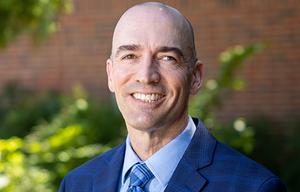
Ray Carter
Director, Center for Independent Journalism
Ray Carter is the director of OCPA’s Center for Independent Journalism. He has two decades of experience in journalism and communications. He previously served as senior Capitol reporter for The Journal Record, media director for the Oklahoma House of Representatives, and chief editorial writer at The Oklahoman. As a reporter for The Journal Record, Carter received 12 Carl Rogan Awards in four years—including awards for investigative reporting, general news reporting, feature writing, spot news reporting, business reporting, and sports reporting. While at The Oklahoman, he was the recipient of several awards, including first place in the editorial writing category of the Associated Press/Oklahoma News Executives Carl Rogan Memorial News Excellence Competition for an editorial on the history of racism in the Oklahoma legislature.