
Thousands rally at the Oklahoma state Capitol building on April 4, 2018, during the third day of a teacher walkout. Photo credit: Jacobin
Education
Socialists claim key role in 2018 Oklahoma teacher walkout
Ray Carter | August 3, 2026
In late March 2018, the Oklahoma Legislature passed one of the largest tax increases in state history, which was quickly signed into law by then-Gov. Mary Fallin. Among other things, the tax increase funded significant pay raises for teachers.
School employees responded to the tax increase and pay raise by launching a coordinated statewide teacher walkout, demanding even more.
The walkout began on April 2, 2018, and continued until April 12, 2018, creating significant learning loss for Oklahoma students, which was further exacerbated by subsequent COVID shutdowns in 2020 and 2021, which were also supported by the same teacher unions and associated organizations that endorsed the 2018 walkout.
No additional pay raises or school funding were approved during or immediately following the de facto strike in Oklahoma.
Who was responsible for the walkout? While several figures and groups have claimed partial credit, self-described socialists are among the most notable to credit themselves with at least an inspirational role.
A pamphlet first issued in 2018 by the Democratic Socialist Labor Commission and the Young Democratic Socialists of America and distributed by the Democratic Socialists of America (DSA), titled “Why Socialists Should Become Teachers,” credits socialists in the teaching profession with a leading role in launching a similar strike that year in West Virginia that preceded and influenced the Oklahoma walkout.
“There are seeds of an Oklahoma Socialist revival germinating in the rich soil of progressive #oklaed.” —Oklahoma teacher Aaron Baker, discussing the 2018 teacher walkout
“The West Virginia strike didn’t happen by chance,” the document stated. “It was the result of creative shop floor organizing by teachers with socialist politics.”
The pamphlet described how socialists were key players in the West Virginia teachers’ strike, which fueled copycat efforts in other states, such as Oklahoma.
“A few DSA members that were teachers in West Virginia public schools began having conversations about new austerity measures facing public employees,” the pamphlet stated. “Our wages had been stagnant for years—unlike our healthcare costs, which were climbing. We formed a reading group, held brainstorming sessions, and quickly agreed that winning our demands would require militant action. We had no idea that we were laying the groundwork for what would culminate in a historic, successful nine-day strike that spread like wildfire to Oklahoma, Kentucky, Arizona, Colorado, and beyond.”
While teachers’ unions had previously demanded raises without demanding specific funding sources for increased spending, the DSA pamphlet said things were different in 2018.
“The prevailing message from many union leaders had been, ‘It’s our job to ask for a raise and a healthcare fix; it’s a lawmaker’s job to figure out where the money comes from,’” the pamphlet stated. “Socialist teachers challenged this notion and made a more explicit demand: raise taxes on the corporations and extractive fossil fuel industries that exploit our people.”
That scenario played out in Oklahoma, with walkout organizers also demanding tax increases on fossil fuel extraction.
Prominent officials involved in the Oklahoma teacher walkout either openly discussed its socialist ties or coordinated their efforts with socialist entities, including an Oklahoma teacher elevated as a spokesman for the state profession by the Oklahoma Education Association (OEA), the state’s National Education Association (NEA) affiliate.
Aaron Baker, an Oklahoma middle school history teacher who was an OEA awardee at the 2019 National Education Association Foundation Gala, has openly touted socialism.
In a 2018 post reflecting on the teacher walkout, Baker wrote, “There are seeds of an Oklahoma Socialist revival germinating in the rich soil of progressive #oklaed.”
Baker has also written that he teaches his students “that the phrase ‘law and order’ is steeped in systemic racism,” that “concentrated wealth multiplies poverty” and that “the greatest nuclear threat the world has ever seen is the United States of America.”
During the April 2018 teacher walkout, the “Socialist Worker” website reported that one teacher participant, identified only as “Mary,” declared, “This is my job now. I didn't know it was my job, but I’m an activist now.”
Alberto Morejon, a prominent leader of the 2018 walkout, met with members of the Socialist Workers Party before the walkout and declared, “This is the right thing to do,” according to “The Militant,” a socialist newsweekly.
“This is my job now. I didn't know it was my job, but I'm an activist now.” —An Oklahoma teacher identified only as “Mary” by the Socialist Worker website
In 2020, Morejon was arrested for making lewd proposals to a minor. A probable cause affidavit revealed that Morejon began communicating with a former student when she was 14, and that he had sent her “approximately five images of an exposed penis over the past two years.” A second victim came forward after Morejon’s arrest, who told police he engaged in similar activity with her starting when she was 14 and an eighth-grader in Morejon’s class. The second victim reported that Morejon convinced her to perform a sex act on him when she was 16. Morejon was ultimately sentenced to five years in prison and required to register as a sex offender for 25 years.
Notably, the DSA pamphlet conceded that teacher strikes create financial hardship for working families.
“Education is a sizable institution in nearly every town, county, and city in the country. When teachers take job action or strike, it has enormous consequences for the district,” the pamphlet stated. “Administrators either have to staff the buildings, which is difficult or impossible, especially with workers of similar skill and training, or they have to close the schools, forcing parents to call out from work or arrange alternate care. Of course, this disruption can also make parents feel that teachers are holding them hostage.”
The pamphlet credited the 2018 teacher strikes with helping revive the socialist movement in the United States, saying the West Virginia strike “reinvigorated local DSA chapters.”
“Many teachers and service personnel have begun to view politics through the lens of class consciousness,” the DSA document stated. “With socialists active in our organizing, we’ll be in a strategic position to make bold, visionary demands to take on the capitalist class.”
The document said that scenario is not confined to West Virginia, but also extended to states like Oklahoma, declaring that “as our fellow teachers in the striking red states showed us, there is the potential for militancy everywhere.”
One likely reason that socialists or socialist-adjacent individuals were able to exert so much influence in Oklahoma schools in 2018 is that school board elections are held on obscure dates with extremely low turnout, granting organized fringe groups much greater sway.
Research done by Americans for Prosperity found turnout for the April 2, 2024, school-board elections in Oklahoma averaged only 6 percent of voters, and some districts reported less than 1 percent turnout.
Research published by the Annenberg Institute at Brown University in January 2020 reviewed data from four states, including Oklahoma. Among other things, researchers found that “the majority of voters in a typical school board election in each of the four states we examine is ‘unlikely’ to have children.”
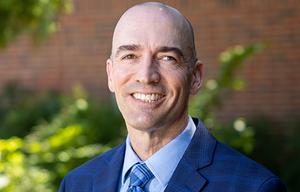
Ray Carter
Director, Center for Independent Journalism
Ray Carter is the director of OCPA’s Center for Independent Journalism. He has two decades of experience in journalism and communications. He previously served as senior Capitol reporter for The Journal Record, media director for the Oklahoma House of Representatives, and chief editorial writer at The Oklahoman. As a reporter for The Journal Record, Carter received 12 Carl Rogan Awards in four years—including awards for investigative reporting, general news reporting, feature writing, spot news reporting, business reporting, and sports reporting. While at The Oklahoman, he was the recipient of several awards, including first place in the editorial writing category of the Associated Press/Oklahoma News Executives Carl Rogan Memorial News Excellence Competition for an editorial on the history of racism in the Oklahoma legislature.