
Education
New test results expose deep reading crisis in Oklahoma classrooms
Ray Carter | October 7, 2025
The results of 2025 state tests, administered in public schools last spring and publicly released this week, show that nearly three in four Oklahoma students are not proficient in reading.
Those results bolster the findings of the National Assessment of Educational Progress (NAEP) tests, which found similarly low levels of reading proficiency in Oklahoma public schools despite record levels of public-school revenue.
The 2025 test results were significantly worse than the 2024 state tests, at least on paper, simply because state officials lowered standards in 2024 and inflated results. The 2025 test was realigned to national standards, and state education officials say the data now provide an honest picture to parents.
“Raising expectations is not about making things harder—it’s about making them more meaningful,” newly appointed State Superintendent of Public Instruction Lindel Fields and Megan Oftedal, executive director of the Commission for Educational Quality and Accountability, said in a joint statement. “When our standards reflect the true demands of college and career readiness, every student, parent, and teacher can have confidence that Oklahoma’s education system is preparing learners for real success.”
Fields and Oftedal said the higher standards “help everyone—parents, educators, and policymakers—see more clearly where students are excelling and where additional support may be needed.”
“In the months ahead, I am asking for your help and unity around two essential goals: literacy and career pathways.” —State Superintendent Lindel Fields
The spring 2025 state tests showed that only 27 percent of Oklahoma third-grade students scored “proficient” or better on the English Language Arts (ELA) test, meaning those students are performing at or above grade level expectations. Further, 43 percent of third-grade students scored “below basic,” meaning they are performing far below grade-level expectations.
English Language Arts state tests are administered annually to all Oklahoma public-school students in grades three through eight. The share scoring proficient or better ranged from just 21 percent of eighth graders to 27 percent of third graders.
The share of students performing below basic on state ELA tests ranged from 32 percent in the fifth grade to 45 percent in seventh grade.
Results were even worse in Oklahoma’s two largest traditional school districts. Just 14 percent of third-grade students in both the Oklahoma City and Tulsa districts tested proficient or better on state ELA tests.
Even in wealthier suburban districts, less than half of third-grade students tested proficient or better on ELA tests.
State Test Results Align with NAEP Findings
State test results align with the findings of NAEP tests, which are administered in all 50 states to provide a true apples-to-apples comparison of academic outcomes across the nation.
According to the NAEP tests administered in Oklahoma and nationwide in 2024, Oklahoma fourth- and eighth-grade students’ achievement in reading and math remains lower than it was before the COVID pandemic.
Oklahoma’s fourth-grade NAEP reading score was not only lower than the pre-pandemic norm but also continued to decline.
The gap between the national average NAEP score for fourth-grade students on the reading test and the Oklahoma average was the second largest recorded in the history of the test, which was first administered in Oklahoma in 1998.
The only gap larger was generated on the 2022 version of the NAEP test, and the gap narrowed slightly in 2024, thanks to the national average declining by two points and not because Oklahoma’s performance improved. In fact, Oklahoma’s average dropped another point.
NAEP tests show that only 23 percent of Oklahoma fourth-grade students scored at or above proficient on the reading test. That was a huge decline from 2015, when Oklahoma students tested above the national average on NAEP reading tests and 33 percent of students were proficient or better.
The 2015 NAEP results were, in part, the product of Oklahoma’s reading law, which then required early intervention for struggling readers and retention as a last resort for third-grade students reading far below grade level.
However, lawmakers effectively gutted that law and now allow social promotion of struggling readers.
Former State Superintendent Joy Hofmeister was a critic of the reading law and championed its negation during her tenure, during which Oklahoma’s academic outcomes cratered.
Mississippi Miracle
Notably, the state of Mississippi was among the states showing the greatest improvement in reading scores in recent years, according to NAEP testing. That state adopted a reading law similar to the one Oklahoma had in place prior to 2015 and Mississippi officials have strengthened the law since then, even as Oklahoma largely abandoned it.
Fourth-grade NAEP reading scores in Mississippi are substantially higher today than in 2013. While Mississippi’s scores dipped slightly during the pandemic, the academic outcomes of students in that state have now rebounded to pre-pandemic levels, unlike the trend in many states.
Tiffany Hoben, the director of Education Partnerships and Strategy for the Cardinal Institute in West Virginia, recently pointed out, “It’s worth noting that Mississippi made massive improvements in the lowest-performing groups with one of the smallest per-pupil expenditures in the nation.”
In contrast, Oklahoma’s decline in reading outcomes has come despite historic levels of funding.
“It’s worth noting that Mississippi made massive improvements in the lowest-performing groups with one of the smallest per-pupil expenditures in the nation.” —Tiffany Hoben
According to financial data reported by schools to the state’s Oklahoma Cost Accounting System (OCAS), Oklahoma public schools received $9,600,703,488 in new revenue in the 2023-2024 school year, an increase of $3.3 billion compared to the $6,300,400,107 reported by schools during the 2017-2018 school year.
On a per-student basis, Oklahoma public-school revenue surged 51 percent from the 2017-2018 school year to the 2023-2024 school year, reaching $13,736 per pupil, a sum that significantly exceeds the average private-school tuition rate in Oklahoma according to recent surveys.
Other calculations indicate Oklahoma’s public-school revenue may be even higher.
A report released in April, “Rankings of the States 2024 and Estimates of School Statistics 2025,” by the National Education Association, found that Oklahoma public schools had $14,066 in revenue receipts per student in the 2023-2024 school year when calculated based on average daily attendance.
Return on Investment?
The trendline of increased public-school revenue coinciding with declining academic outcomes in Oklahoma has been noted by national researchers.
When Edunomics Lab analyzed return-on-investment (ROI) data from 2013 to 2024, tracking NAEP fourth-grade reading and eighth-grade math scores alongside per-pupil spending, researchers found Oklahoma’s per-pupil spending far outpaced inflation during that time, but Oklahoma’s NAEP scores in both reading and math were far lower today than in 2013.
In Oklahoma, Edunomics noted, “Reading 4th grade scores fell through the decade and continue to decline even as spending increased.”
Oklahoma lawmakers have attempted to address the state’s reading problem, voting last year to outlaw “three cueing” instruction that has been shown to harm reading comprehension, and mandating that teachers be trained in phonetic instruction and other elements of the “science of reading” that research has proven to succeed.
New Superintendent Stresses Literacy
Officials have indicated Oklahoma’s reading challenges will receive continued attention in the coming year.
One of Fields’ first acts as state superintendent was to send an email to educators across the state, noting the need for a joint effort to improve outcomes.
“In the months ahead, I am asking for your help and unity around two essential goals: literacy and career pathways,” Fields wrote. “Literacy is the gift that unlocks the future for a child; it opens doors to opportunity, confidence, and lifelong learning. At the same time, we must ensure that every student who graduates from an Oklahoma high school is prepared for whatever comes next—whether that’s college, career, military service, or another meaningful pursuit.”
In their joint statement, Fields and Oftedal said Oklahoma students “are capable of meeting these higher standards,” and said the data generated by the 2025 state tests can be used to “strengthen instruction, target resources, and ensure every student is prepared for success beyond high school.”
Similarly, House Speaker Kyle Hilbert, R-Bristow, recently wrote on X, “Until 3rd grade kids learn to read. After that, they’re reading to learn. Early childhood literacy is essential! Mississippi turned this around and Oklahoma can too.”
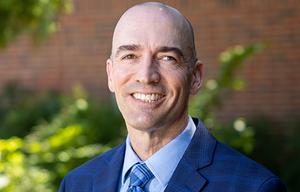
Ray Carter
Director, Center for Independent Journalism
Ray Carter is the director of OCPA’s Center for Independent Journalism. He has two decades of experience in journalism and communications. He previously served as senior Capitol reporter for The Journal Record, media director for the Oklahoma House of Representatives, and chief editorial writer at The Oklahoman. As a reporter for The Journal Record, Carter received 12 Carl Rogan Awards in four years—including awards for investigative reporting, general news reporting, feature writing, spot news reporting, business reporting, and sports reporting. While at The Oklahoman, he was the recipient of several awards, including first place in the editorial writing category of the Associated Press/Oklahoma News Executives Carl Rogan Memorial News Excellence Competition for an editorial on the history of racism in the Oklahoma legislature.